
Somewhere around their first birthday, most toddlers start eyeing anything with wheels. A tricycle is usually the first “real” vehicle a child gets to call their own, and it’s also one of those purchases parents tend to overthink — understandably, since a bad one either gets outgrown in three months or sits unused because it’s too heavy to fold or too tricky to steer.
If you’re looking for a tricycle for toddlers aged 1 to 3 years, this guide walks through what actually matters, what tends to get overlooked, and how to buy one online without regretting it by the time your child turns four.
Why Age Range Matters More Than You’d Think
Tricycles aren’t a one-size-fits-all category, even within toddlerhood. An 18-month-old and a 3-year-old are at very different stages — one is still building balance and core strength, the other might already be steering and pedalling with real intent.
This is where a multifunctional tricycle for kids earns its price. Instead of buying a single-mode trike your child outgrows within a year, a modular design can shift as they grow — starting as a parent-pushed ride, moving to a pedal trike, and eventually converting into a balance bike.
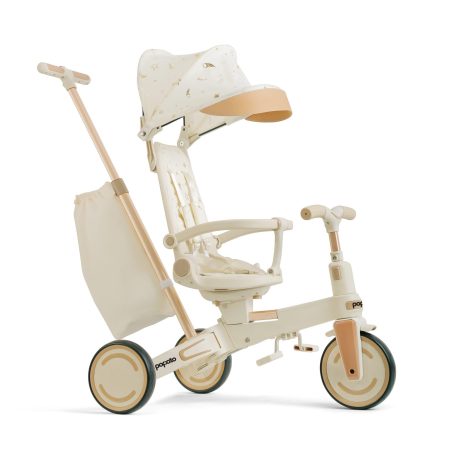
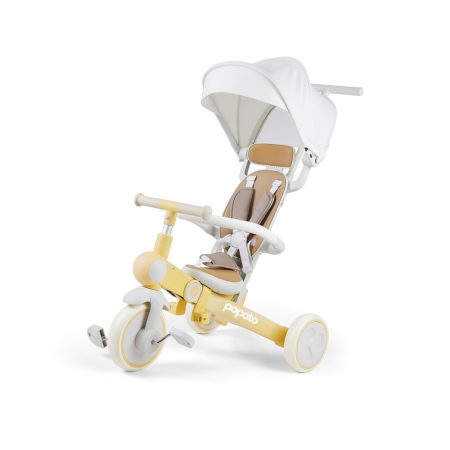
Popato’s T-9, for example, is built around this exact idea. It’s a 9-in-1 tricycle rated for ages 1 to 4, designed to move from stroller-style pushing through to trike and balance-bike modes as your child’s ability changes. The T-7 follows a similar logic with 7 adaptive modes in the same 1–4 year range, including a detachable pedal system that switches the trike into balance-bike mode once your toddler is ready to steer independently.
The Popato T-9 — a 9-in-1 tricycle built to move from push-along to trike to balance bike as your toddler grows.
What to Check Before Buying a Tricycle Online
A tricycle looks fairly simple in photos, which is exactly why the details matter more once it arrives at your door. A few things worth checking on any product page before you buy:
- Certification — look for EN 71, which is the safety standard most children’s ride-on toys and tricycles in India are tested against
- Weight capacity — check this against how long you expect to use it, not just your child’s current weight
- Harness — a 5-point harness is worth having for the earliest riding stage, when your toddler is still getting used to sitting upright and steering
- Fold mechanism — a one-step or one-hand fold makes a real difference if you’re storing it in a small hallway or taking it along on trips
- Frame weight — lighter frames are easier for parents to carry up stairs or load into a car boot, though they shouldn’t come at the cost of stability
As a reference point, the T-9 weighs around 6.2 kg and folds in one step, while the T-7 is a bit heavier at 8.2 kg but adds a quick-brake system and sweat-resistant grips. Both carry a 25 kg load capacity and EN 71 certification, which is a reasonable baseline to compare against other tricycles you might be considering.
Premium Foldable Tricycle: What Sets It Apart
The word “premium” gets thrown around loosely in baby product listings, so it helps to know what it should actually mean in a tricycle. Beyond looks, a premium foldable tricycle usually stands out in three areas:
Build quality. Frames that hold up to a year of daily use without wobbling or rusting are worth paying a bit more for. Powder-coated finishes tend to last longer against scratches and everyday wear.
Genuine foldability. Not every “foldable” tricycle folds down small enough to matter. A trike that still takes up half your car boot after folding isn’t solving the storage problem it claims to.
Ride comfort and control. Cushioned seats, sweat-resistant grips, and a brake system that responds quickly all affect how much your toddler actually enjoys using it — which, in the end, decides whether it gets used daily or forgotten after the first week.
Buying a Tricycle at the Best Price: What You’re Actually Paying For
Tricycle prices in India can range anywhere from a couple of thousand rupees for a very basic single-mode model to ₹18,000–20,000 for a multi-stage convertible trike. The price gap usually comes down to:
- How many stages or modes the tricycle converts through
- Frame material — aluminium tends to cost more than steel but weighs less
- Included safety features like a harness or brake system
- Certification and after-sales warranty
Within Popato’s own range, the T-9 sits at ₹12,999 as a lighter, more basic 9-mode trike, while the T-7 is priced at ₹17,999 with a few additional touches like a cushioned seat and quick-brake system. Comparing what each price actually includes — rather than just the number on the tag — is a more useful way to decide where your money should go.
The Popato T-7 — a 7-in-1 tricycle with a quick-brake system, 5-point harness, and one-step fold.
What Happens After the Tricycle Stage
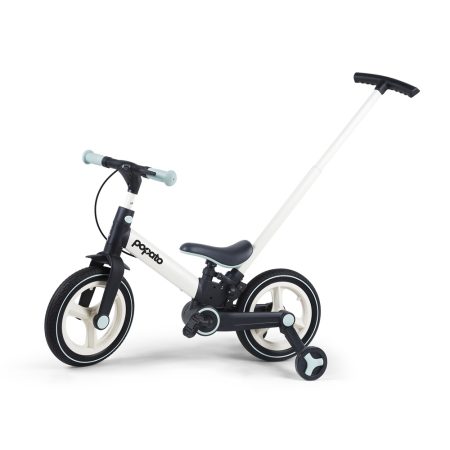
Most toddlers eventually outgrow the tricycle stage somewhere between ages 3 and 5, depending on how quickly their balance and confidence develop. If you’d rather plan one step ahead, some parents choose a convertible bicycle instead of a traditional trike — one that starts in push mode for the youngest riders, moves into balance mode, and later converts into a full pedal bicycle. Popato’s B-4, for instance, is built around this longer runway, rated from 1.5 to 6 years, so the same product can realistically last from the toddler stage into early school years.
Whether that kind of longer-term product makes sense for you really depends on how much you want to buy again in a year or two versus paying a bit more upfront for something that stretches further.
A Few Practical Tips Before You Buy
- Measure your storage space and car boot before assuming a “foldable” tricycle will actually fit
- If you’re buying for a younger toddler (12–18 months), prioritise a model with a secure harness and a push handle for parental control
- Check the maximum load capacity against how long you realistically want the product to last
- Read through the full specification list, not just the feature highlights, so you know exactly what you’re getting for the price
Final Thoughts
There isn’t a single “correct” tricycle for every toddler — it depends on your child’s age, how much they’ve already taken to balance and pedalling, and how much flexibility you want built into one purchase. A modular, multi-mode trike tends to offer better value over time, since it adapts instead of getting replaced. If you’re comparing options, looking at how a range like Popato’s T-7 and T-9 is structured — by age range, load capacity, and number of modes — gives you a fairly practical way to judge what’s on offer elsewhere too. You can browse the full tricycle and bicycle range on Popato’s website.